


For cleanroom operators, gloves are more than just personal protective equipment (PPE), they're a second skin. Worn continuously throughout an entire shift, cleanroom gloves must provide the dexterity, comfort, and cleanliness needed to perform precision work while protecting both the operator and the product.
Because an operator's hands are often the primary "tools" used inside the cleanroom, any discomfort or skin irritation quickly becomes more than an inconvenience. Redness, itching, or dry, cracked skin can make delicate tasks uncomfortable and even discourage proper glove compliance. If you've ever experienced these symptoms after wearing cleanroom gloves, you may wonder whether you're allergic to them.
The answer isn't always as straightforward as you might think.
Is It a Latex Allergy?
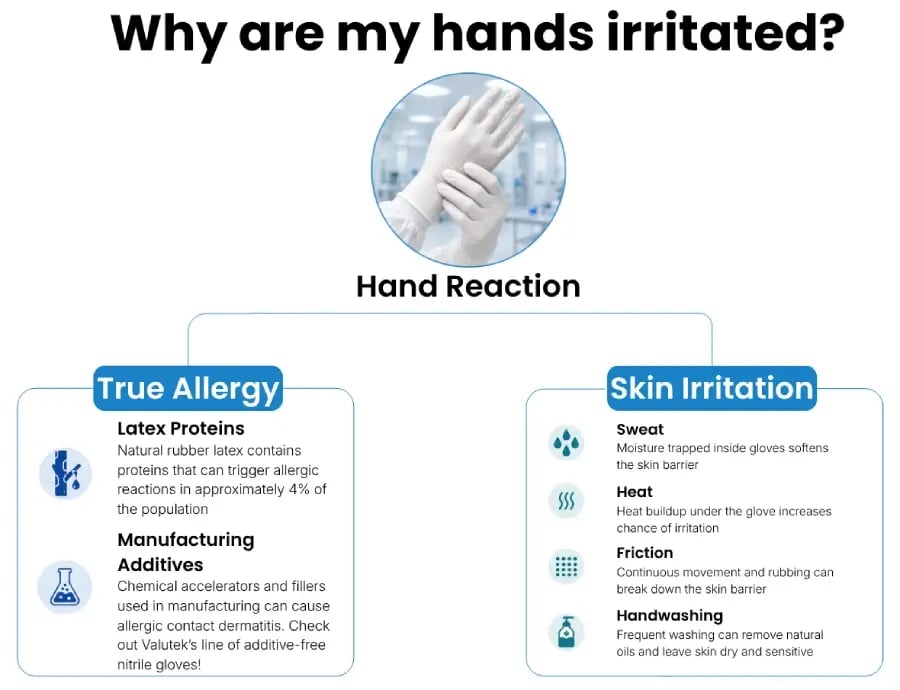
Natural rubber latex gloves were once the standard in many industries because of their inherent durability and elasticity. However, latex is derived from rubber trees and contains naturally occurring proteins that can trigger allergic reactions in sensitive individuals. According to the National Library of Medicine, the prevalence of latex allergies is estimated to be approximately 4% of the general population. Reactions can range from mild skin irritation to severe, potentially life-threatening allergic responses.
For this reason, along with the advancement of cleaner synthetic materials, nitrile gloves have become the preferred choice in cleanroom environments. They provide a wider range of chemical resistance, improved comfort, and a cleaner base material without the natural latex proteins that cause true latex allergies.
Can You Be Allergic to Nitrile?
True allergies to the nitrile polymer itself are extremely rare. In most cases, skin reactions associated with nitrile gloves are caused by additives used during manufacturing rather than the nitrile material itself.
Additives like chemical accelerators help cure (vulcanize) the nitrile during manufacturing, while fillers are sometimes added to reduce material costs. While these additives might drive down manufacturing costs, certain chemicals are known to cause Allergic Contact Dermatitis (Type IV hypersensitivity) in susceptible individuals.
Symptoms may include:
- Redness
- Itching
- Dry or flaky skin
- Small blisters
- A rash where the glove contacts the skin
Unlike latex allergies, these reactions are typically localized to the skin and are not generally life-threatening.
Because the symptoms can appear similar, many people assume they have a glove allergy when they're actually experiencing more generalized skin irritation.
Sometimes It Isn't an Allergy at All
Not every skin reaction is caused by an allergy.
Most commonly, cleanroom operators experience Irritant Contact Dermatitis, a non-allergic condition caused by repeated exposure to moisture, friction, frequent handwashing, and prolonged glove wear.
Nitrile gloves are designed to create a protective barrier, but they are also non-breathable by nature. During long shifts, heat and perspiration can become trapped inside the glove, softening the skin barrier and making hands more susceptible to irritation.
Frequent handwashing can further contribute by stripping away the skin's natural protective oils. If hands are not completely dry before donning fresh gloves, trapped moisture can weaken the skin barrier even more. Even trace soap residue left on the skin may increase irritation over time.
How to Reduce Glove-Related Skin Irritation
The following best practices can help improve comfort while reducing the risk of skin irritation:
- Consider additive-free gloves. Gloves manufactured without common chemical accelerators and fillers reduces one of the leading causes of glove-related allergic reactions. Product specification sheets should confirm whether accelerators, fillers, or other additives are present.
- Confirm gloves undergo extensive post-processing. Quality cleanroom gloves typically undergo online chlorination, offline chlorination, multiple DI water wash cycles, or a combination of these processes to remove residual manufacturing chemicals and reduce extractable contaminants.
- Wash and thoroughly dry hands before donning gloves. Maintaining good hand hygiene while limiting trapped moisture can reduce irritation during extended wear.
- Use gentle cleansers. Mild, fragrance-free soaps help preserve the skin's natural protective barrier. Avoid harsh industrial hand scrubs unless specifically required.
- Moisturize after your shift. Fragrance-free hand creams can help restore the skin barrier after work. While lotions are generally not permitted inside cleanroom environments due to contamination concerns, regular moisturizing after work and before bed is encouraged.
- Give your hands a break when possible. During approved breaks, briefly removing gloves allows the skin to cool and dry.
- Consider glove liners. Thin nylon glove liners can absorb perspiration, reduce friction, and improve comfort during extended wear.
Choosing the Right Glove
When evaluating cleanroom gloves, consider more than just cleanliness classifications. Material formulation, manufacturing processes, post-processing, and overall comfort all contribute to operator acceptance and long-term glove compliance. The right glove should protect both the product and the person wearing it.
Valutek's accelerator-free nitrile glove liners are made from 100% nitrile butadiene rubber (NBR) that contain no natural rubber latex, fillers, silicones, sulfur, or chemical accelerators. The result is a cleanroom glove designed to deliver exceptional comfort, dexterity, and consistent performance for operators who wear gloves throughout the workday.
The Bottom Line
Skin irritation doesn't always mean you're allergic to your gloves. In many cases, selecting a glove with a cleaner formulation, maintaining good hand care practices, and choosing products designed for extended wear can significantly improve operator comfort while supporting contamination control.
At Valutek, Every Touch Matters. Every touch is an opportunity to protect a product, maintain a controlled environment, and support the people performing critical work. By designing cleanroom gloves with both contamination control and operator comfort in mind, we help operators perform confidently – one touch at a time.
Explore More Resources: